Kyoto Journal 110: Color & Kyoto
Preorder for shipping in mid-April 2026
The Kyoto basin is surrounded by mountains, and this natural environment with its unique climate, seasons, and flora gave birth to a rich and subtle color palette that Kyoto people have refined and integrated into their culture over the centuries. Suggested by author and garden designer Marc Peter Keane, the theme of our 110th issue is Color & Kyoto. Walls of white plaster, earth, and rusted corrugated metal; petals of soft pink; neon green maples; powdery, pastel ajisai; accents of gold and red; indigo dyed cloth; pure green of matcha in an ink black tea bowl…. the shades and hues are endless. There is even a color named after the Kamo River itself—鴨川鼠, Kamogawa gray.
We encourage readers to further explore this rich universe, and become aware of how color is used in crafts, tea, food, architecture, clothing, and literature. Among the articles in the issue, Reggie Pawle examines the meaning of “unfathomable” black in Buddhism, the French novelist Corinne Atlan observes Kyoto’s various reds, Marc Peter Keane describes the vermilion color of torii gates, and Japanese art curator Meher McArthur discusses the colors in traditional Japanese painting. The issue features excerpts from a new translation of Tanizaki Junichirō’s timeless essay “In Praise of Shadows” and Malaysian writer Peck Gee Hua contributes an essay on the relationship between ma, kokoro, and white.
J.R. Mayrand traces the origins of Kyoto purple and Jennifer Louise Teeter profiles Matsuzaki Riku, who received the prestigious Ronnie Award in 2026 for his work reviving traditional Kyoto indigo dying techniques. Bruce Hamana writes about the blacks and greens in tea culture and Lane Diko shares the work of gold- and silver-leaf artist Rakusho Hiroto. KJ editor Susan Pavloska writes on the ties between iro and eros, architect Kisho Kurokawa explains the nature of Rikyu gray, and Meredith Mckinney, translator of The Pillow Book, offers insight on color in the Heian period. In addition, we feature images of shōjin ryōri by Nagase Mitsue, poetry by Margaret Chula and Omori Shizuka, and observations by Robert Brady, and many book reviews, including Lauren W. Deutsch’s take on artist Miya Ando’s new dictionary of “rain words.” Finally, we introduce a new, regular column by Edward J. Taylor, “Following the Brush.”
The work of the KJ design team—along with the beautiful photography and artwork of our many contributors—make Color & Kyoto one our more visual stunning print issues.
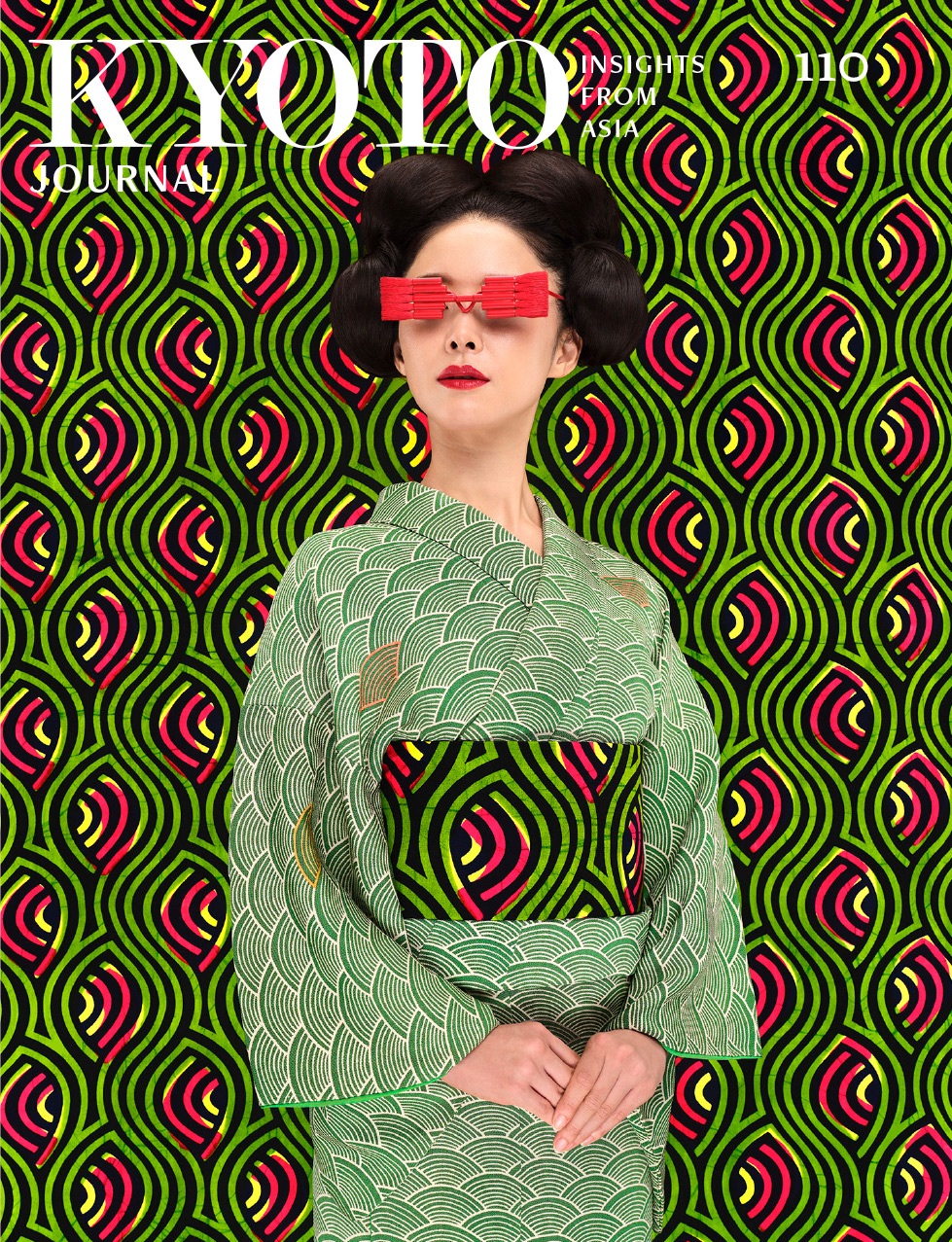
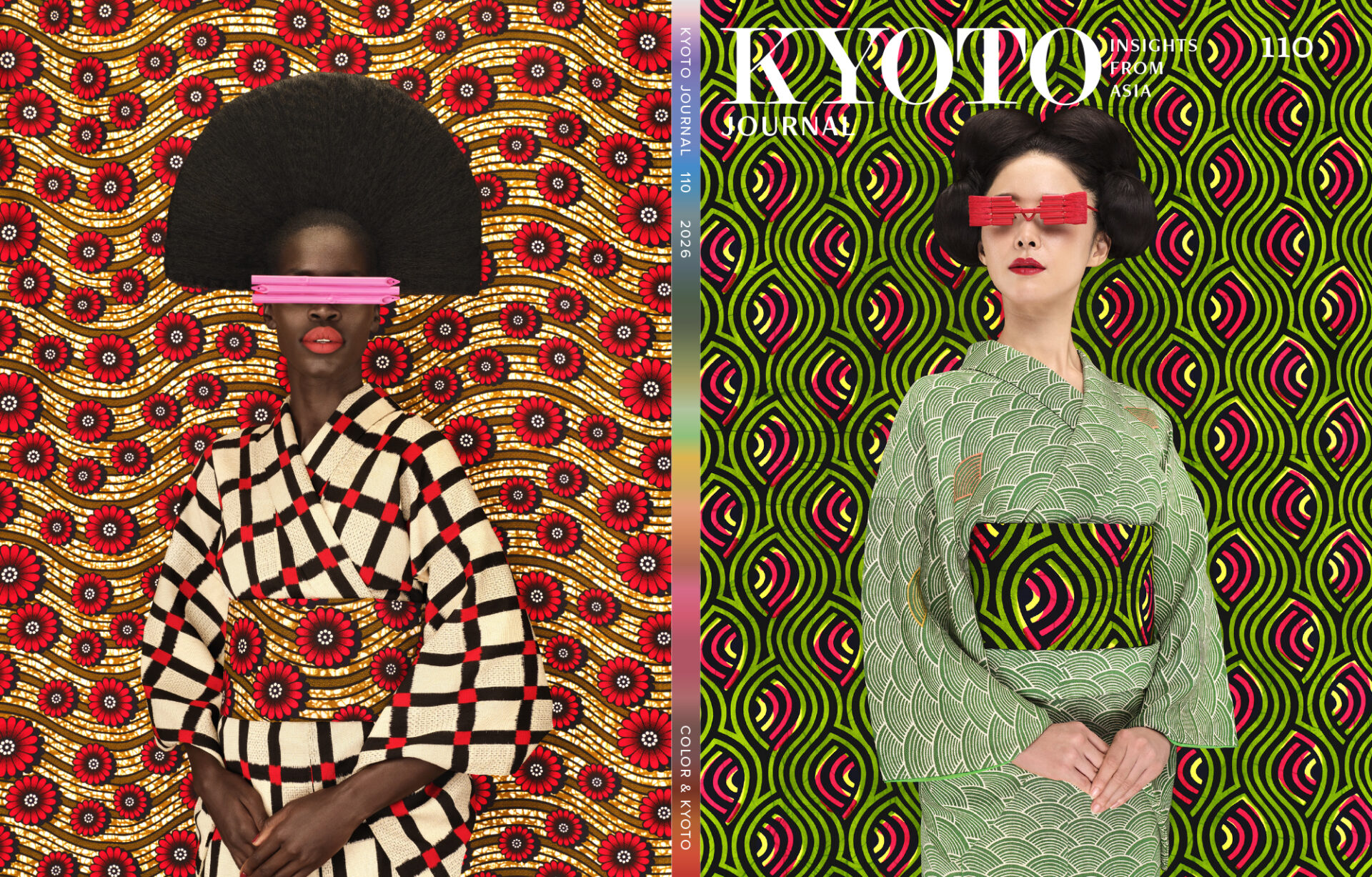
Cover + BACK COVER: © Thandiwe Muriu
For KYOTOGRAPHIE African Residency Program 2026, Courtesy 193 Gallery